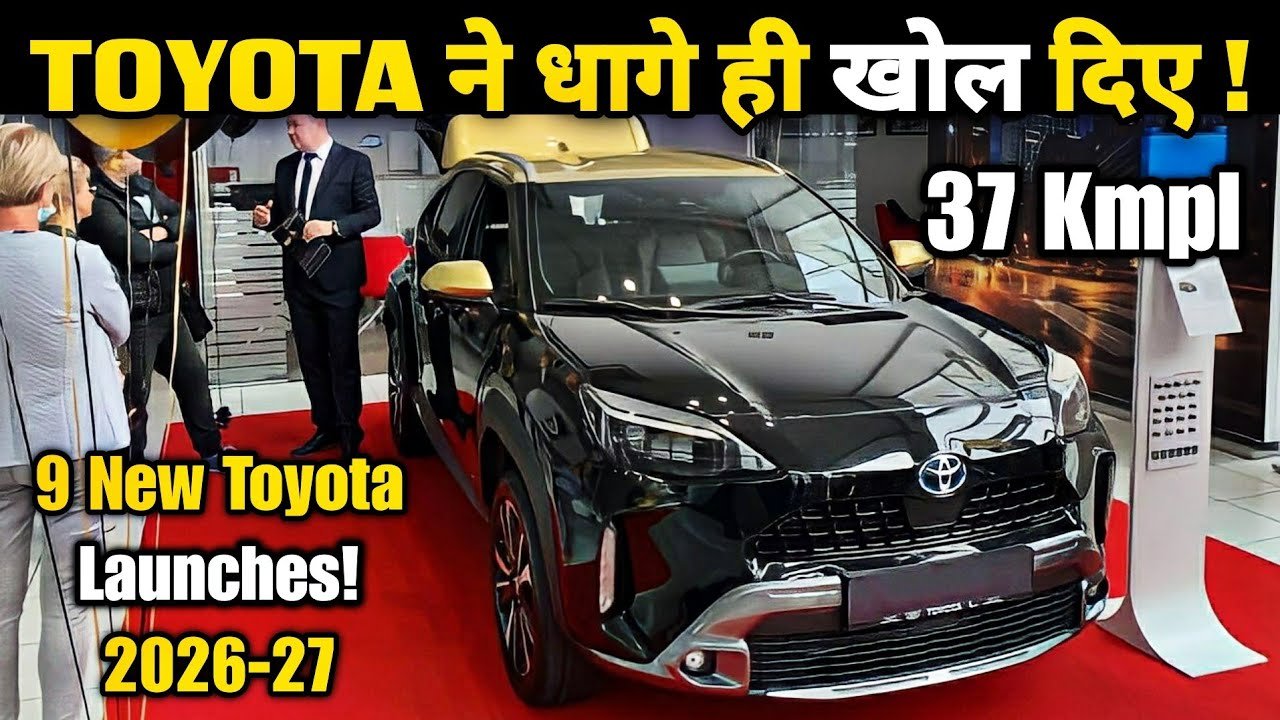
Toyota is preparing for an exciting period in the global automotive market, and the 2026-2027 lineup is expected to bring a mix of refreshed models, advanced hybrid technology, new-generation vehicles and updated SUVs. Toyota has already built a strong reputation for reliability, fuel efficiency and long-term ownership value, and its upcoming products are expected to continue that strategy while adding more modern technology and electrification.
For buyers looking for a new Toyota in the coming years, the biggest attraction will likely be the combination of hybrid powertrains, improved safety features, modern interiors and new-generation designs. From popular SUVs and family cars to electrified models, Toyota’s future lineup could offer something for a wide range of customers.
Toyota’s Focus on Hybrid Technology
Hybrid technology is expected to remain one of the most important parts of Toyota’s 2026-2027 strategy. Unlike manufacturers that are moving entirely toward electric vehicles, Toyota has continued to invest in a combination of hybrid, plug-in hybrid, battery-electric and conventional powertrains.
Toyota’s hybrid systems are popular because they can provide improved fuel economy without requiring owners to regularly charge the vehicle. For customers who want better efficiency but are not ready to move completely to an electric vehicle, hybrid models can provide a practical middle ground.
The upcoming generation of Toyota vehicles is also expected to receive improvements in electric motors, batteries, software and power management. These developments could make future Toyota hybrids more efficient and responsive while maintaining the reliability for which the company is known.
Next-Generation Toyota SUVs
SUVs are expected to remain at the center of Toyota’s product strategy during 2026 and 2027. The company already has a strong SUV portfolio, including models such as the RAV4, Highlander, Land Cruiser and other region-specific products.
The next-generation models are expected to feature more sophisticated exterior designs, improved cabin technology and upgraded safety systems. Toyota could also expand the availability of electrified powertrains across its SUV range.
For many buyers, the most important improvement could be the interior. Modern Toyota models are expected to receive larger infotainment displays, improved digital instrument clusters, wireless smartphone connectivity and more advanced driver-assistance features.
Toyota RAV4 and the Future of the Popular SUV
The Toyota RAV4 has become one of the company’s most important global products. Its combination of practicality, efficiency and SUV styling has made it popular in several major markets.
Future versions are expected to continue Toyota’s electrification strategy, with hybrid and plug-in hybrid technology playing an important role. Buyers can expect a modernized design and technology-focused cabin, while Toyota will likely continue emphasizing practicality and everyday usability.
The RAV4’s future could be particularly important for Toyota because competition in the compact SUV segment is becoming increasingly intense. New models from both traditional manufacturers and EV-focused companies are putting pressure on established brands to offer better technology and efficiency.
Toyota Fortuner and the Next Generation
The Toyota Fortuner is one of the most recognizable Toyota SUVs in markets such as India and several countries across Asia. Its rugged design, strong road presence and body-on-frame construction have helped it develop a loyal customer base.
The next-generation Fortuner is expected to be one of the most interesting Toyota developments for customers who prefer traditional SUVs. A future version could bring a more modern exterior, upgraded cabin technology and improved powertrain efficiency.
Electrification could also become an important part of the Fortuner’s future. Toyota has been exploring ways to combine its established SUV platforms with hybrid technology, potentially offering improved fuel efficiency without sacrificing the capabilities expected from a large SUV.
Toyota Innova and Family-Focused Models
The Toyota Innova has become an important family vehicle, particularly in the Indian market. The latest generation moved toward a more modern monocoque platform and hybrid technology, making it different from the traditional Innova formula.
Toyota’s future family vehicles are likely to continue focusing on comfort, practicality and fuel efficiency. Hybrid technology could remain particularly attractive for large family vehicles because it can reduce fuel consumption during everyday city driving.
For customers who need a spacious vehicle for long-distance travel, future Toyota MPVs and crossovers could offer improved seating comfort, advanced entertainment technology and better safety features.
New Toyota Cars and Global Electrification
Toyota’s 2026-2027 strategy will not be limited to hybrid vehicles. Battery-electric cars are also expected to play a growing role in the company’s global lineup.
Toyota has been expanding its electric vehicle strategy through new models and technology development. Future electric Toyotas are expected to focus on range, efficiency, charging technology and improved software.
The company is also working toward next-generation battery technology, which could eventually help electric vehicles achieve greater driving range and shorter charging times. If these technologies reach mass production successfully, they could significantly change Toyota’s electric vehicle portfolio.
Advanced Safety and Technology
Technology will be another major area of development for Toyota’s upcoming cars. Modern customers increasingly expect vehicles to offer advanced driver assistance, connected features and sophisticated infotainment systems.
Future Toyota models are expected to receive upgraded versions of the company’s safety systems. Features such as adaptive cruise control, lane assistance, automatic emergency braking, blind-spot monitoring and parking assistance could become more advanced and widely available.
Inside the cabin, larger screens and improved voice-control systems are likely to become more common. Toyota may also increase the integration of smartphone services and connected-car technology across different models.
What Buyers Can Expect in 2026-2027
Toyota’s upcoming lineup could offer several different choices depending on the buyer’s requirements. Customers looking for maximum fuel efficiency may prefer hybrid models, while those interested in zero-emission driving may consider Toyota’s growing electric range.
SUV buyers could see major developments in popular models, while families may benefit from updated MPVs and spacious crossovers. At the same time, Toyota is expected to continue offering practical petrol and hybrid vehicles in markets where charging infrastructure for electric vehicles is still developing.
The exact models, specifications, features and launch schedules can vary significantly between countries. A Toyota model introduced in Japan or the United States may not necessarily arrive in India with identical specifications or at the same time.
Conclusion
The Toyota 2026-2027 new car lineup could represent an important transition period for the Japanese automaker. Hybrid technology is expected to remain a major strength, while next-generation SUVs, electric vehicles and advanced safety technologies could expand Toyota’s presence in the rapidly changing automotive market.
Models such as the RAV4, Fortuner and Innova are likely to remain important names for Toyota customers, while newer electrified products could attract buyers looking for modern alternatives. With a combination of hybrid efficiency, SUV capability, improved technology and next-generation design, Toyota’s upcoming lineup has the potential to remain highly competitive in both India and international markets.
For car enthusiasts and potential buyers, 2026 and 2027 could therefore be two very important years to watch. Toyota’s biggest challenge will be balancing its traditional strengths of reliability and practicality with the rapidly changing demands for electrification, connectivity and advanced automotive technology.