Escalation in the Middle East Conflict
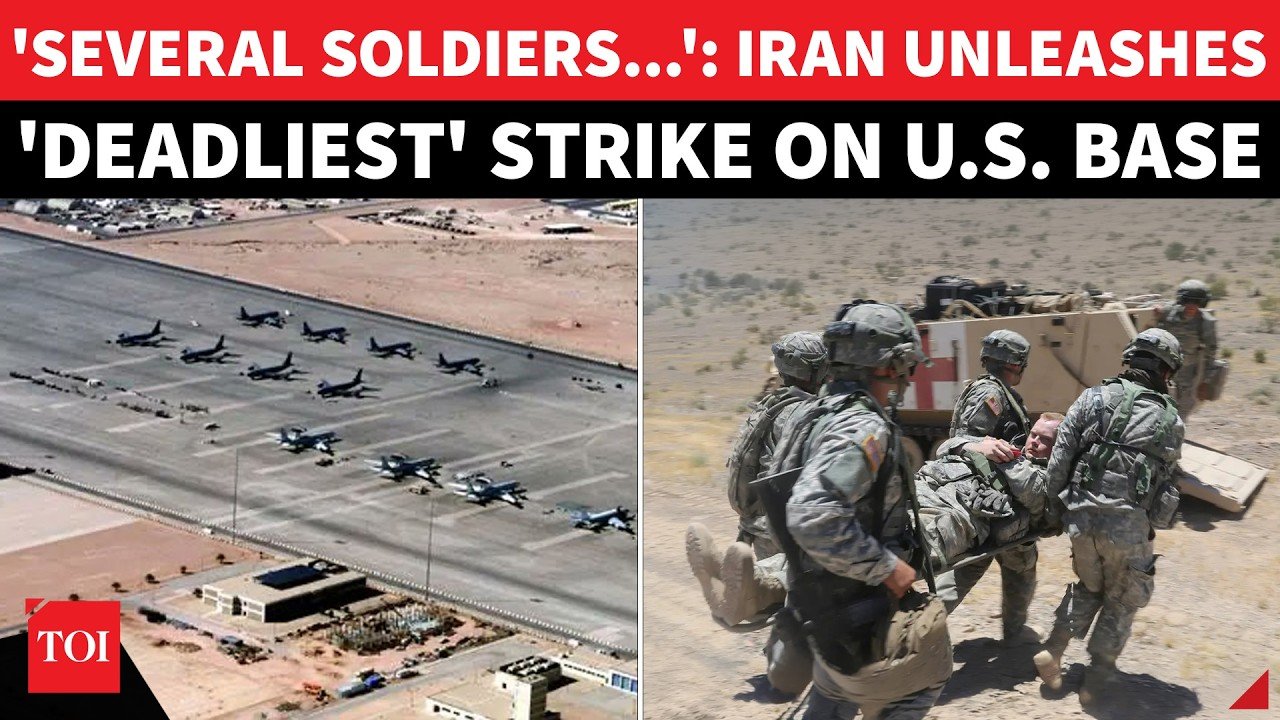
Tensions in the Middle East have reached a dangerous new level following a reported precision strike by Iran on a United States military installation in Saudi Arabia. The attack, which targeted the strategically significant Prince Sultan Air Base, marks another major escalation in the ongoing conflict involving Iran, the United States, and its regional allies.
According to multiple reports, the strike resulted in injuries to American troops and damage to critical military equipment. The incident underscores the evolving nature of warfare in the region, where precision-guided missiles and drone technology are increasingly being deployed to hit high-value targets with accuracy.
The broader conflict, which began in late February 2026, has already led to hundreds of casualties and significant geopolitical instability, raising concerns about a prolonged and widening war.
Details of the Strike
The Iranian attack reportedly involved a combination of ballistic missiles and unmanned aerial vehicles. These weapons targeted facilities within the Prince Sultan Air Base, a key hub for U.S. air operations in the Gulf region.
Reports indicate that at least 10 to 12 U.S. military personnel were injured in the strike, with some suffering serious wounds. The attack also caused damage to military infrastructure, including refueling aircraft that are essential for sustaining long-range air missions.
While no immediate fatalities were confirmed in this specific incident, the injuries highlight the growing risks faced by U.S. forces stationed in the region. The base itself plays a vital role in supporting air campaigns, surveillance operations, and logistical missions across the Middle East.
Strategic Importance of the Target
Prince Sultan Air Base is one of the most important U.S. military installations in Saudi Arabia. It serves as a forward operating base for American airpower, housing advanced aircraft, surveillance systems, and support units. The damage to refueling aircraft is particularly significant. These aircraft extend the operational range of fighter jets and bombers, enabling sustained military pressure over long distances. Earlier reports have suggested that multiple U.S. refueling planes were damaged in similar strikes, potentially impacting operational readiness.
By targeting such assets, Iran appears to be aiming not only to inflict immediate damage but also to disrupt the broader military capabilities of the United States in the region.
Iran’s Military Strategy
The strike reflects Iran’s growing emphasis on precision warfare. Over the past decade, Iran has invested heavily in missile technology and drone systems, enabling it to conduct long-range, high-accuracy attacks.
Rather than engaging in direct large-scale confrontation, Iran has adopted a strategy of targeted strikes against critical infrastructure and military assets. This approach allows Tehran to project power while avoiding full-scale conventional warfare.
Iranian officials have framed such attacks as retaliatory measures in response to U.S. and allied military operations. Since the start of the conflict, Iran has reportedly launched multiple waves of strikes against U.S. bases across the region, including in Saudi Arabia, Bahrain, and other Gulf states.
Impact on US Military Operations
The attack on the Saudi base could have significant implications for U.S. military operations. Damage to aircraft and infrastructure may temporarily limit the ability of American forces to conduct sustained air campaigns. Although many injured personnel are expected to recover and return to duty, the cumulative toll of repeated attacks is becoming increasingly evident. Reports suggest that more than 300 U.S. service members have been injured since the conflict began, highlighting the ongoing strain on military resources.
The United States has responded by reinforcing its presence in the region, deploying additional troops and strengthening air defense systems. However, the effectiveness of these measures is being tested by the frequency and precision of Iranian strikes.
Regional and Global Repercussions
The incident has intensified fears of a broader regional conflict. Saudi Arabia, a key U.S. ally, finds itself at the center of the confrontation, with its territory increasingly becoming a battleground for proxy and direct attacks. The escalation also has significant implications for global energy markets. The Middle East remains a critical hub for oil production and transportation, and continued instability could disrupt supply chains and drive up prices.
Recent developments in the conflict have already contributed to rising oil prices and increased volatility in global markets. The possibility of further attacks on energy infrastructure adds another layer of uncertainty to an already fragile economic environment.
Diplomatic Efforts and Uncertain Outlook
Despite the ongoing violence, there have been efforts to pursue diplomatic solutions. U.S. officials have indicated a willingness to negotiate, while also maintaining a strong military posture.
However, significant challenges remain. Both sides appear deeply entrenched, and mutual distrust continues to hinder meaningful progress toward de-escalation.
Analysts warn that without a breakthrough in diplomacy, the conflict could drag on, leading to further casualties and greater regional instability. The continued exchange of strikes raises the risk of miscalculation, which could trigger a larger and more destructive confrontation.
Conclusion
Iran’s precision strike on the U.S. air base in Saudi Arabia represents a critical moment in the ongoing Middle East conflict. The attack not only caused injuries to American troops and damage to military assets but also highlighted the changing dynamics of modern warfare. As both sides continue to escalate their actions, the situation remains highly volatile. The coming weeks will be crucial in determining whether the conflict moves toward resolution or spirals into a broader regional war with far-reaching consequences.
The incident serves as a stark reminder of the fragile balance of power in the Middle East and the urgent need for diplomatic efforts to prevent further escalation.