Introduction
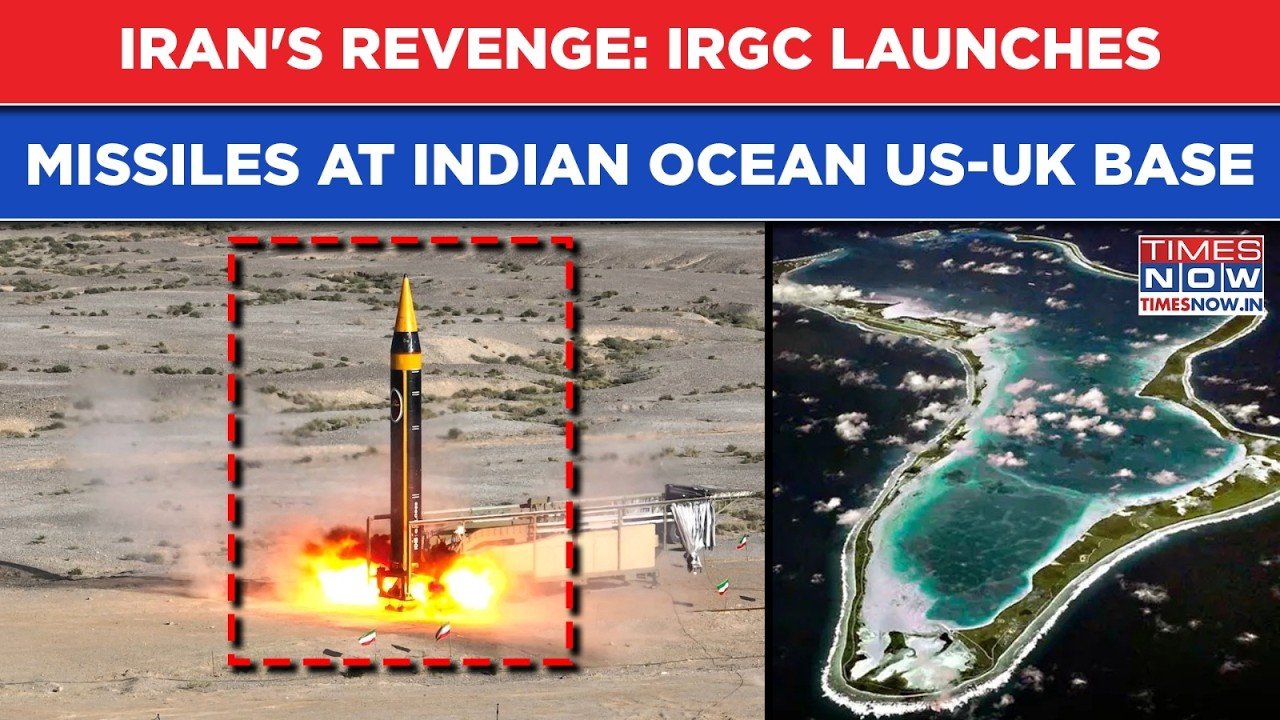
In a dramatic escalation of the ongoing global crisis, Iran’s Islamic Revolutionary Guard Corps has taken a bold and unprecedented step by launching long-range ballistic missiles toward the joint United States–United Kingdom military base at Diego Garcia in the Indian Ocean. The move marks a significant shift in Iran’s military posture, signaling its ability and willingness to strike targets far beyond its immediate region. While the missiles reportedly failed to hit their intended target, the implications of this action are profound and far-reaching.
The Strike That Shook Global Security
On March 21, 2026, Iran launched two intermediate-range ballistic missiles aimed at the strategically critical Diego Garcia base. According to multiple reports, neither missile successfully struck the installation. One missile reportedly failed during flight, while the other triggered a defensive response from a U.S. naval vessel, which attempted interception using advanced missile defense systems.
Despite the lack of physical damage, the attack has captured global attention. This was not just another missile test or regional strike—it was a calculated demonstration of power. By targeting a base located approximately 4,000 kilometers away, Iran has sent a strong message about its expanding military capabilities and strategic reach.
Why Diego Garcia Is a Critical Target
Diego Garcia is one of the most important military bases in the world. Located in the Indian Ocean, it serves as a key hub for U.S. and U.K. military operations, including long-range bomber missions, naval deployments, and logistical support across the Middle East and Asia.
The base’s remote location has historically made it a safe and secure asset, far removed from most conflict zones. However, Iran’s attempt to strike it challenges this long-standing assumption. By demonstrating that even distant bases are within reach, Tehran has effectively redefined the concept of strategic safety.
The targeting of Diego Garcia also carries symbolic importance. It represents a direct challenge to Western military dominance and highlights Iran’s intent to expand the battlefield beyond traditional geographic limits.
A New Level of Missile Capability
For years, Iran maintained that its missile program was limited to a range of around 2,000 kilometers. However, this latest strike suggests that its capabilities may extend much further—potentially up to 4,000 kilometers. The Wall Street Journal
This development has serious implications for global security. A missile range of this magnitude places not only military bases but also major cities and strategic assets across multiple continents within potential reach. It significantly enhances Iran’s deterrence capabilities and forces adversaries to reconsider their defensive strategies. Military analysts believe that this move is part of a broader effort by Iran to showcase its technological advancements and assert itself as a major power capable of projecting force over long distances.
The Broader Context of Escalation
The missile strike did not occur in isolation. It is part of a rapidly escalating conflict involving Iran, the United States, Israel, and several allied nations. In recent weeks, tensions have intensified due to a series of military actions, including airstrikes on Iranian infrastructure and retaliatory attacks by Tehran.
For instance, earlier in March, U.S. forces carried out large-scale strikes on Iranian military sites, destroying multiple facilities and escalating hostilities further. These actions were followed by Iranian counterattacks targeting energy infrastructure and regional assets, contributing to a cycle of escalation that shows no signs of slowing down.
The decision by the United Kingdom to allow the use of its bases for operations against Iran has also played a role in heightening tensions. Tehran has made it clear that any country supporting attacks against it could become a target.
Global Reactions and Rising Concerns
The international response to Iran’s missile launch has been one of concern and caution. Defense experts are particularly worried about the implications of long-range missile capabilities in an already volatile geopolitical environment.
One of the key concerns is the effectiveness of missile defense systems. While the attempted interception of the missile demonstrates the capabilities of modern defense technology, it also highlights the challenges involved in stopping high-speed, long-range ballistic threats. Another major concern is the risk of further escalation. Each new development increases the likelihood of a broader conflict involving multiple nations. The situation is further complicated by economic factors, as rising tensions in key regions threaten global energy supplies and trade routes.
Oil prices have already shown signs of volatility, and any disruption in major shipping lanes could have significant economic consequences worldwide.
A Strategic Message from Iran
While the missiles did not hit their target, the strike can be seen as a strategic message rather than a purely العسكري action. By attempting to reach Diego Garcia, Iran has demonstrated that it is capable of challenging even the most secure and distant military installations.
This move also serves as a warning to Western powers. It signals that Iran is prepared to escalate the conflict and expand its range of operations if provoked. The psychological impact of such a demonstration is significant, as it forces adversaries to reconsider their assumptions about distance and safety.
What Lies Ahead
The future remains uncertain, but the risks are clear. The United States and its allies may respond by strengthening their military presence and enhancing defensive measures around key installations. Diplomatic efforts may also intensify in an attempt to prevent further escalation.
At the same time, Iran may continue to develop and showcase its missile capabilities, aiming to reinforce its position on the global stage. The possibility of further strikes, whether successful or not, cannot be ruled out.
A single successful hit in the future could dramatically alter the course of the conflict, potentially triggering a large-scale military response.
Conclusion
Iran’s attempted long-range missile strike on the US-UK base at Diego Garcia marks a turning point in modern warfare. Even though the attack did not result in direct damage, its strategic significance cannot be overstated. By demonstrating the ability to target locations thousands of kilometers away, Iran has redefined the boundaries of its military reach and introduced new uncertainties into global security dynamics. The incident serves as a powerful reminder that in today’s world, distance is no longer a guarantee of safety.
As tensions continue to rise, the need for careful diplomacy, strong defense systems, and strategic restraint becomes increasingly critical. The world now stands at a crossroads, watching closely as events unfold that could shape the future of international relations for years to come.