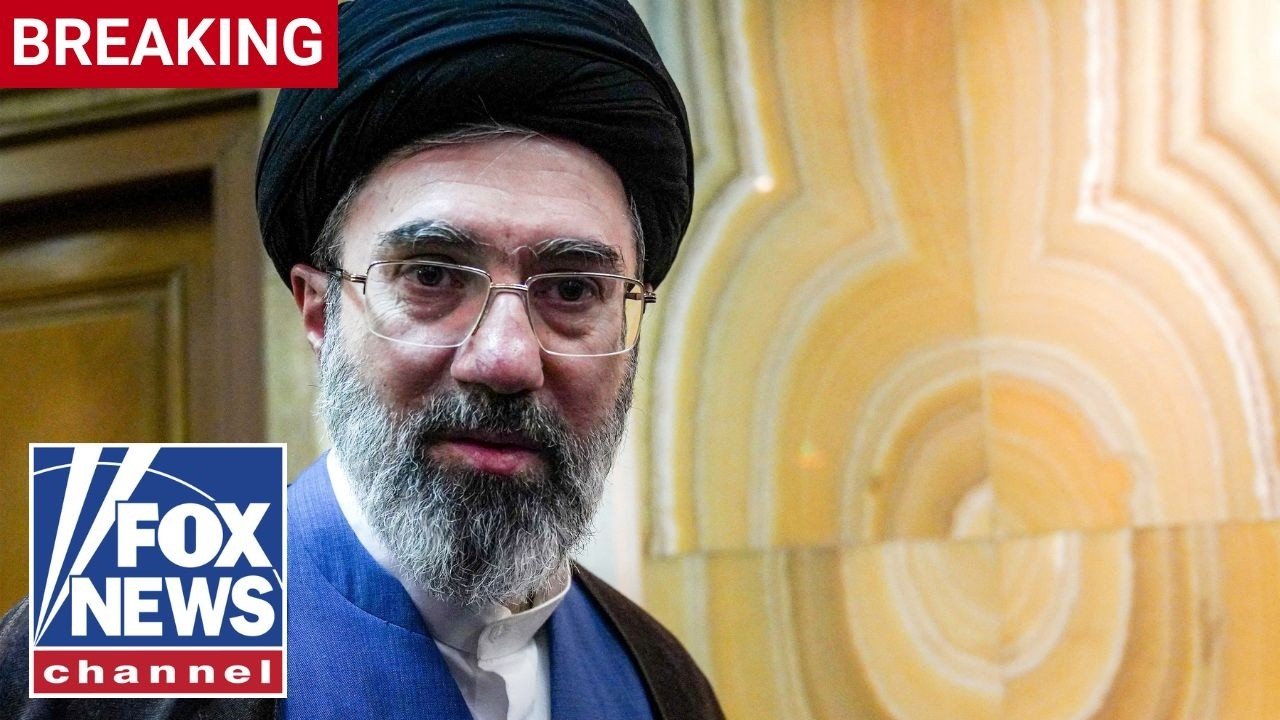
A New Era of Leadership in Iran
Tensions in the Middle East have escalated sharply after Iran’s newly appointed Supreme Leader, Mojtaba Khamenei, issued his first public message since taking power. His statement signaled a more aggressive tone toward the United States and its military presence in the region. In a message broadcast through Iranian state media, the new leader warned that American military bases across the Middle East could become direct targets if current hostilities continue.
Mojtaba Khamenei assumed leadership following the death of his father, Ayatollah Ali Khamenei, who was killed during a major airstrike amid escalating conflict involving the United States and Israel. The leadership transition occurred during one of the most volatile periods in the region’s recent history, making the new leader’s first remarks especially significant.
First Statement Sends Strong Message
In his first official statement, Mojtaba Khamenei emphasized that Iran would not retreat under pressure from foreign powers. He warned that U.S. military bases located in neighboring countries should be closed immediately, stating that they could become legitimate targets if they continue to operate against Iranian interests.
The message was read on Iranian state television rather than delivered in person, which has fueled speculation about the new leader’s security situation and health. Regardless, the statement made clear that Iran intends to maintain a hard-line stance against the United States and its allies. Khamenei also argued that American military installations in the region represent a major threat to Iran’s sovereignty and security. According to him, regional governments hosting these bases should reconsider their alliances with Washington if they want to avoid becoming part of the conflict.
Growing Conflict Between Iran and the United States
The warning comes amid a broader military confrontation that has intensified since late February. Following the airstrike that killed several high-ranking Iranian officials, Iran launched retaliatory attacks against targets linked to the United States and its allies across the region. Drone and missile strikes have reportedly targeted several strategic locations, including military facilities and logistical bases. Iranian forces have claimed that some attacks successfully damaged American infrastructure in the Gulf region. These actions have heightened fears that the confrontation could escalate into a wider regional war.
U.S. officials have responded by strengthening military deployments in the Middle East while warning Iran against further aggression. American leadership has repeatedly stated that attacks on U.S. personnel or bases would trigger significant retaliation.
The Strategic Importance of the Strait of Hormuz
Another major point in Khamenei’s statement concerned the Strait of Hormuz, one of the world’s most critical oil shipping routes. The new leader indicated that the waterway could remain effectively closed as a strategic tool against Iran’s adversaries.
Roughly a fifth of the world’s oil supply passes through the narrow strait each day, making it a vital artery for global energy markets. Any disruption to shipping in this region has immediate consequences for oil prices and international trade.
Since tensions began escalating, energy markets have already reacted strongly. Oil prices have surged as traders worry about the possibility of a prolonged blockade or continued military activity in the Persian Gulf. Iranian officials argue that controlling access to the strait gives them leverage in their confrontation with Western powers. Critics, however, warn that interfering with such a critical global shipping lane could trigger an even broader international response.
Regional Reactions and Rising Anxiety
The new leader’s warning has caused concern among countries across the Middle East. Many Gulf nations host U.S. military bases and depend heavily on American security partnerships. These governments now find themselves in a difficult position, balancing their alliances with Washington while trying to avoid becoming direct targets in the escalating conflict.
Israel has also reacted strongly to the leadership change in Tehran. Israeli officials have indicated that they are closely monitoring the situation and remain prepared to respond to any threats from Iran or its allied groups.
Meanwhile, several armed groups aligned with Iran across the region, including militias in Iraq and Lebanon, have expressed support for Tehran’s position. Analysts warn that these groups could open additional fronts in the conflict if tensions continue to rise.
A Hardline Leadership Approach
Political analysts believe Mojtaba Khamenei is likely to pursue a more aggressive foreign policy than his predecessors. He is widely viewed as closely aligned with Iran’s Islamic Revolutionary Guard Corps, the powerful military organization that plays a central role in the country’s security strategy.
His rise to power has reinforced expectations that Iran will adopt a tougher stance against Western influence in the Middle East. Many experts see his leadership as a continuation of the ideological framework established during the Islamic Revolution, but potentially with fewer compromises.
Supporters inside Iran argue that strong resistance against foreign pressure is necessary to protect national sovereignty. Critics, however, worry that this approach could deepen international isolation and increase the risk of open warfare.
Global Implications
The confrontation between Iran and the United States carries significant implications far beyond the Middle East. Disruptions to oil supplies, military escalation, and growing geopolitical tensions could affect global markets and international security. Energy prices have already experienced volatility as investors react to the possibility of a long-term conflict affecting shipping routes and oil production. Governments around the world are closely monitoring developments, concerned that the situation could spiral into a wider international crisis.
Diplomatic efforts to de-escalate tensions have so far produced limited results. With both sides maintaining firm positions, many analysts fear that the coming weeks could prove decisive in determining whether the conflict expands further.
Uncertain Future for the Region
Mojtaba Khamenei’s first public statement as Iran’s Supreme Leader has set the tone for what may be a turbulent period in Middle Eastern politics. His warning about targeting U.S. bases and maintaining pressure through strategic waterways signals that Iran is prepared for a prolonged confrontation.
At the same time, the United States and its allies continue to emphasize their readiness to defend military personnel and regional partners. This combination of strong rhetoric and active military operations has created an extremely tense environment. Whether diplomacy can reduce tensions or the conflict continues to intensify remains uncertain. What is clear, however, is that the leadership change in Iran has already reshaped the geopolitical landscape, and the world is watching closely as events unfold.