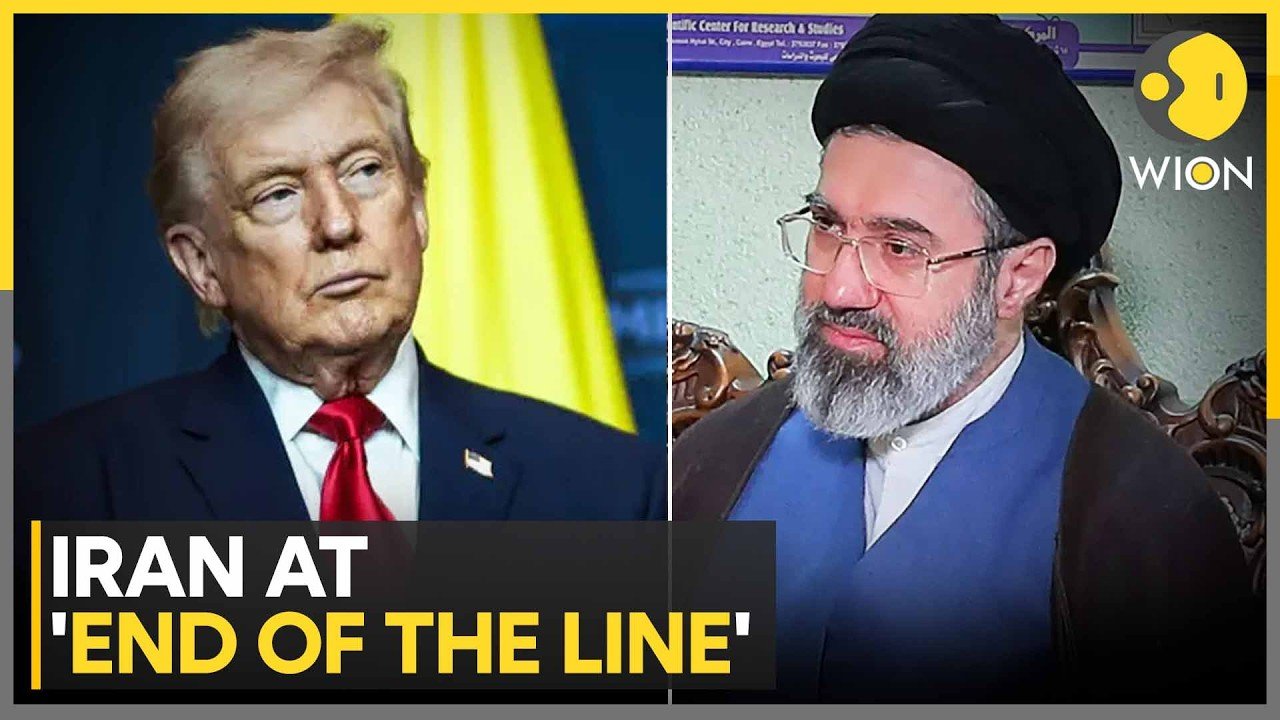
A Bold Declaration from Washington
In a dramatic statement that has drawn global attention, U.S. President Donald Trump declared that the United States has effectively won its conflict with Iran. Speaking at a rally in Hebron, Kentucky, Trump praised the strength and effectiveness of the American military while insisting that the fight is not completely over. According to the president, the United States has already achieved decisive military success, but American forces must remain engaged to ensure that the mission is fully completed.
Trump’s remarks came after weeks of intense military operations in the Middle East. The United States, along with its regional allies, launched a series of large-scale airstrikes and naval attacks targeting Iranian military infrastructure. These operations reportedly damaged or destroyed key elements of Iran’s military power, including naval vessels and strategic facilities.
During his speech, Trump told supporters that the outcome of the war was determined very quickly. He stated that American forces had gained the upper hand almost immediately after operations began. However, he emphasized that leaving the battlefield too soon could allow Iran to rebuild its capabilities, which is why the United States must stay until the job is finished.
Claims of a Rapid Military Victory
President Trump described the conflict as a major military achievement for the United States. According to his statements, American forces were able to neutralize large parts of Iran’s military power within a short period of time. He even suggested that the decisive moment came within the first hour of the operation, indicating how quickly the United States established dominance in the conflict.
Reports indicate that U.S. military strikes targeted a wide range of Iranian military assets. Among the most significant claims was that dozens of Iranian naval ships were destroyed during the operation. Trump credited the success of the campaign to the strength, technology, and training of the U.S. armed forces.
Despite celebrating these achievements, the president also warned that victory should not lead to complacency. He argued that withdrawing too early could allow Iran to recover and create new threats in the future. Trump told the audience that America must complete the mission to prevent having to return to another conflict with Iran later.
The Strategy Behind “Finishing the Job”
Trump’s call to “finish the job” reflects a broader strategic concern within Washington. U.S. officials believe that while Iran’s military capabilities may have been significantly weakened, the country still has the ability to reorganize and rebuild its forces over time. By maintaining pressure, American leaders hope to prevent Iran from restoring its missile systems, naval strength, or nuclear development programs. Military analysts say this strategy is designed to force Iran into a weaker negotiating position or potentially push it toward diplomatic talks.
The phrase “finish the job” has also become a central theme in Trump’s messaging about the conflict. He has repeatedly argued that previous administrations failed to confront Iran strongly enough and that the current campaign is meant to permanently eliminate what he describes as a long-standing threat.
Regional Tensions Continue to Rise
While Trump has declared victory, the broader situation in the Middle East remains extremely tense. Iran has strongly condemned the U.S. attacks and has vowed to resist foreign military pressure. Iranian officials argue that the strikes represent a violation of international law and have promised retaliation if the attacks continue.
The conflict has also raised fears of a wider regional war. Iran has allies and proxy groups across the Middle East, including in Iraq, Syria, and Lebanon. These groups could potentially join the conflict, expanding the fighting far beyond Iran’s borders.
Recent reports indicate that the crisis has already affected several countries in the region. Missile launches, drone attacks, and military mobilizations have created a volatile environment where even a small incident could escalate into a larger confrontation.
Global Economic and Political Impact
The ongoing conflict has not only affected the Middle East but has also had consequences for the global economy. Energy markets have reacted nervously to the rising tensions, particularly because the Persian Gulf is one of the world’s most important routes for oil transportation.
Any disruption in this region could significantly affect global energy supplies and cause oil prices to rise sharply. Governments around the world are closely monitoring the situation, as prolonged conflict could trigger economic instability in many countries.
Political leaders in Europe and Asia have called for restraint from both the United States and Iran. Many international organizations have urged the two countries to return to diplomatic negotiations before the conflict escalates further.
Domestic Reactions in the United States
Inside the United States, Trump’s declaration of victory has sparked debate among political leaders and analysts. Supporters of the president argue that the military campaign demonstrates American strength and sends a powerful message to hostile governments around the world.
Critics, however, warn that declaring victory too early could be risky. Some analysts point out that conflicts in the Middle East have historically been complex and difficult to resolve quickly. They caution that even if Iran’s military has been weakened, the possibility of insurgent attacks, cyber warfare, or proxy conflicts still remains. Members of Congress from both parties have also raised questions about the long-term strategy for the region. Some lawmakers are calling for greater oversight of military operations and a clearer plan for how and when U.S. forces might eventually withdraw.
The Uncertain Road Ahead
Despite the president’s confident tone, the future of the conflict remains uncertain. Military operations are still ongoing, and both sides continue to exchange threats and warnings. While Trump insists that the United States has already won the war, he has also made it clear that the mission will continue until American leaders believe the threat from Iran has been completely eliminated.
For now, the world is watching closely as events unfold. The situation remains fluid, and the coming weeks will likely determine whether the conflict moves toward a final resolution or evolves into a longer and more complicated struggle. What is certain is that the relationship between the United States and Iran has entered one of its most intense and unpredictable phases in decades. The decision to stay and “finish the job” may shape the geopolitical landscape of the Middle East for years to come.