A New Phase in an Escalating Conflict
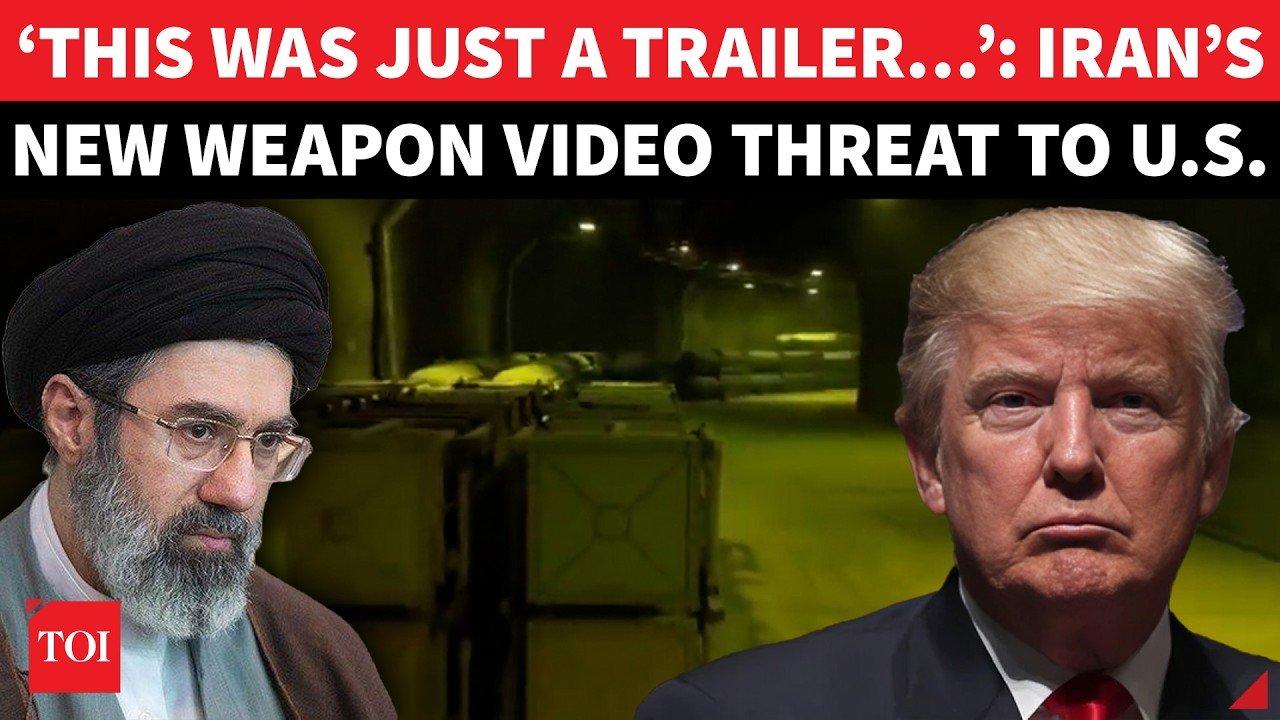
Tensions between Iran and the United States have entered a dangerous new phase, marked by psychological warfare, military signaling, and increasingly aggressive rhetoric. A newly released Iranian weapons video has captured global attention, not just for its visuals but for the chilling message accompanying it: “You haven’t seen anything yet.” The statement, widely interpreted as a direct warning to Washington, signals that the conflict may be far from reaching its peak.
The video comes at a time when the Middle East is already on edge, with both sides showcasing military strength and issuing warnings that hint at further escalation. Analysts believe such videos are not merely displays of power but calculated moves aimed at influencing both domestic audiences and international adversaries.
The Message Behind the Video
Iran’s video reportedly showcases advanced missile systems, underground facilities, and mobile launch platforms. These displays are designed to project strength and resilience, particularly after recent military exchanges with the United States and its allies.
What makes the message particularly alarming is Iran’s claim that the weapons shown may not even represent its most advanced capabilities. Iranian officials have previously warned that only their “lower-tier” arsenal has been used so far, suggesting that more sophisticated and destructive systems remain in reserve.
This narrative is clearly intended to create uncertainty. By implying that stronger weapons are yet to be deployed, Iran increases the psychological pressure on its adversaries, especially the United States.
A War of Signals and Strategy
Military experts often describe modern conflicts as battles not only fought on the ground but also in the realm of perception. The release of such videos is a classic example of strategic signaling. It serves multiple purposes: deterring enemy action, boosting domestic morale, and shaping global opinion.
Iran has a history of showcasing its military infrastructure through dramatic visuals. From underground “missile cities” to mobile launch systems capable of rapid deployment, these displays are meant to emphasize survivability and readiness.
At the same time, the United States has responded with its own show of force, releasing footage of precision strikes targeting Iranian assets. This exchange of visuals has effectively turned the conflict into a high-stakes information war, where perception can be as powerful as actual military capability.
Rising Global Concerns
The timing of the video is critical. It comes amid growing fears of a broader regional conflict that could draw in multiple countries and disrupt global stability. Recent developments have already raised alarm bells worldwide.
that the United States has issued global security alerts, warning of potential threats to its citizens and interests worldwide. Meanwhile, military buildups and threats surrounding key locations like the Strait of Hormuz have heightened fears of a major confrontation.
Adding to the चिंता, Iran’s recent missile activity has demonstrated extended range capabilities, potentially putting new regions within reach. These developments suggest that the stakes are no longer limited to the Middle East but could have global implications.
The Role of Advanced Weaponry
A central theme in Iran’s messaging is the emphasis on advanced weapon systems. These include ballistic missiles, cruise missiles, and mobile launchers designed to evade detection. Mobile missile launchers, in particular, are a key component of Iran’s strategy, allowing rapid deployment and relocation to avoid counterstrikes. Such systems complicate the battlefield significantly. Unlike fixed installations, mobile platforms are harder to track and destroy, giving Iran a strategic advantage in prolonged engagements.
The suggestion that even more advanced weapons exist adds another layer of complexity. Whether or not these claims are fully accurate, they contribute to an atmosphere of uncertainty that can influence decision-making at the highest levels.
Psychological Warfare and Public Perception
The phrase “You haven’t seen anything yet” is as much a psychological weapon as any missile. It is designed to instill fear, create doubt, and keep adversaries guessing. In modern conflicts, controlling the narrative is often as important as controlling territory. By releasing dramatic footage and bold statements, Iran aims to shape how the conflict is perceived both domestically and internationally.
This strategy is not unique to Iran. The United States and other nations also use media and messaging to project strength and maintain strategic advantage. However, the intensity and timing of Iran’s latest video have made it particularly impactful.
Risks of Escalation
While such displays of power may serve strategic purposes, they also carry significant risks. Each new threat or show of force increases the chances of miscalculation. In a highly charged environment, even a minor incident could trigger a larger conflict.
The current situation is especially volatile due to the involvement of multiple actors and the strategic importance of the region. The Strait of Hormuz, for example, is a critical global energy route, and any disruption could have far-reaching economic consequences.
Moreover, the use of increasingly advanced weapons raises concerns about the potential scale of destruction. As both sides continue to escalate their rhetoric and capabilities, the margin for error becomes dangerously thin.
What Comes Next?
The release of this weapons video is unlikely to be the final chapter in the ongoing standoff. Instead, it may signal the beginning of a new phase characterized by more aggressive posturing and possibly more direct confrontations.
Diplomatic efforts will play a crucial role in determining the outcome. However, with both sides appearing unwilling to back down, the path to de-escalation remains uncertain.
For now, the world watches closely as the situation unfolds. The message from Iran is clear: it believes it has more to show and is prepared to use it if necessary. Whether this is a bluff or a genuine warning remains to be seen, but the impact is already being felt across the globe.
Conclusion
Iran’s latest weapons video is more than just a display of military hardware. It is a powerful statement in an increasingly tense geopolitical landscape. By combining visual spectacle with stark warnings, Iran has sent a message that resonates far beyond its borders. As tensions continue to rise, the importance of careful diplomacy and strategic restraint cannot be overstated. The phrase “You haven’t seen anything yet” serves as a reminder of the uncertainty and خطر that define the current moment. Whether it leads to further escalation or prompts efforts toward peace will depend on the choices made in the days ahead.