A Dangerous Turning Point in the Middle East
The Middle East has entered a new and volatile phase as Iran launched retaliatory strikes on Saudi oil refineries following attacks on its own gas facilities. The escalation comes after reported strikes by the United States and Israel on Iran’s critical energy infrastructure, including the massive South Pars gas field.
This sequence of events marks a dangerous turning point, where economic infrastructure—rather than purely military targets—has become central to the conflict. Iran’s response signals a shift in strategy, targeting the lifeline of global energy markets and raising fears of a broader regional war.
The Trigger: Attacks on Iran’s Energy Backbone
The crisis intensified when Iran’s South Pars gas field, the largest in the world, was hit in a coordinated strike. The facility is crucial not only to Iran’s domestic energy supply but also to regional gas markets. The attack caused significant disruption, halting production and affecting neighboring Qatar’s energy operations. The strike was seen in Tehran as a direct attempt to cripple its economic and strategic capabilities.
Iranian officials quickly condemned the attack and warned that retaliation would target energy infrastructure across the Gulf. Within hours, these warnings turned into action.
Iran’s Retaliation: Strikes on Saudi Oil Refineries
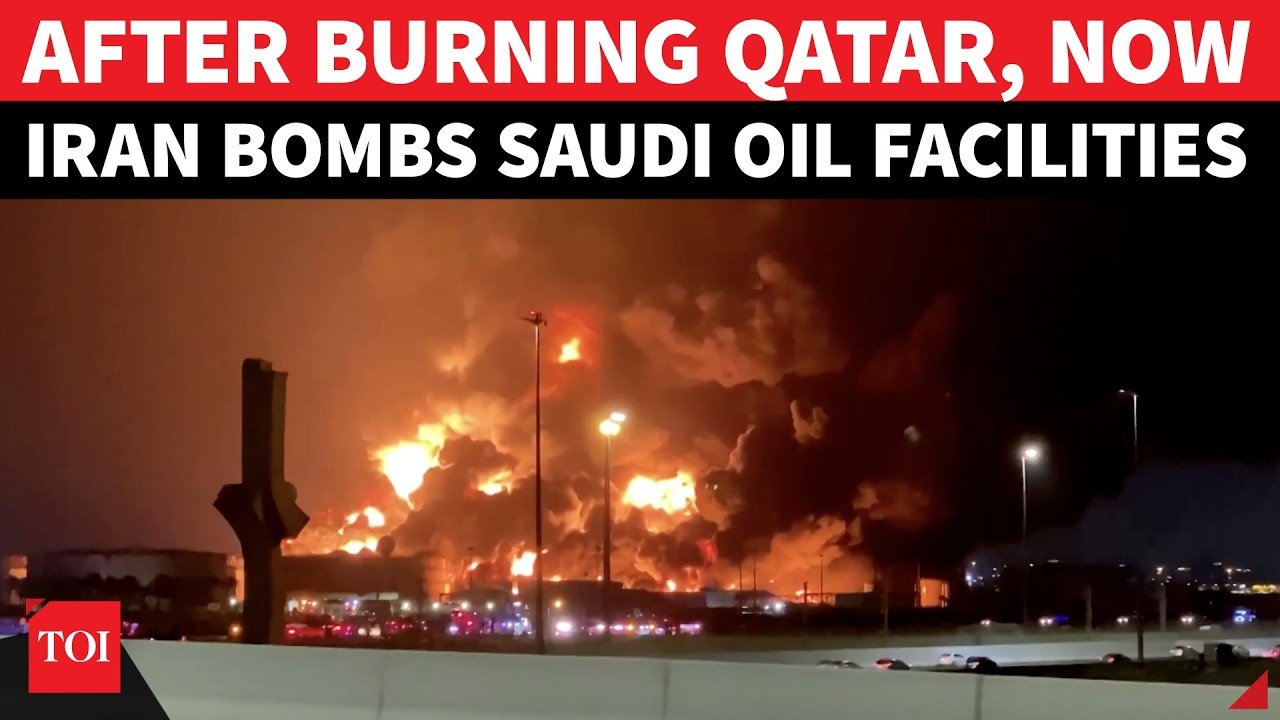
In response, Iran launched drone and missile strikes on key oil facilities in Saudi Arabia. Among the most significant targets was the Ras Tanura refinery, one of the largest oil processing facilities in the region, capable of handling around 550,000 barrels per day.
The attacks caused fires and temporary shutdowns, forcing Saudi authorities to halt operations as a precaution. While initial damage reports suggested limited structural destruction, the psychological and economic impact was immediate.
These strikes were not isolated incidents. Reports indicate that multiple energy sites across the Gulf—including facilities in the UAE and Qatar—were also targeted, highlighting the coordinated nature of Iran’s retaliation.
Oil Markets React with Shock
Global energy markets reacted instantly to the escalation. Oil prices surged sharply, with Brent crude nearing $110 per barrel as fears of supply disruption spread.
The Strait of Hormuz, a critical chokepoint through which nearly a fifth of the world’s oil passes, has become a focal point of concern. Any disruption to shipping routes in this region could have catastrophic consequences for global supply chains.
Additionally, Qatar’s decision to halt liquefied natural gas production due to security threats has further tightened global energy availability. This combination of reduced output and rising geopolitical risk has created a perfect storm for energy markets.
Regional Fallout and Expanding Targets
The conflict is no longer confined to Iran and Israel. It has expanded into a broader regional confrontation involving multiple Gulf nations. Missile strikes on Qatar’s Ras Laffan gas hub and damage to UAE facilities demonstrate how quickly the crisis is spreading.
Iran has also issued warnings urging evacuations around major energy installations in Saudi Arabia, the UAE, and Qatar. Such warnings suggest that further attacks may be imminent, adding to the sense of uncertainty and fear across the region.
The involvement of multiple countries increases the risk of miscalculation, where a single incident could trigger a larger, more destructive conflict.
Strategic Importance of Energy Infrastructure
The targeting of oil refineries and gas facilities highlights the strategic importance of energy infrastructure in modern warfare. Unlike traditional military targets, these facilities have global implications. Saudi Arabia is one of the world’s largest oil producers, and its refineries are critical to maintaining global supply. Any disruption—even temporary—can lead to price spikes and economic instability worldwide.
Similarly, Iran’s gas fields and Qatar’s LNG facilities play a vital role in meeting global energy demand. By targeting these assets, both sides are effectively weaponizing energy, turning economic systems into tools of war.
Economic and Global Implications
The consequences of this conflict extend far beyond the Middle East. Rising oil prices impact everything from transportation costs to food prices, affecting economies around the world.
Countries heavily dependent on energy imports are particularly vulnerable. For nations like India, which relies on Gulf oil, prolonged disruptions could lead to inflationary pressures and economic strain.
Financial markets have already begun reacting to the uncertainty, with energy stocks fluctuating and investors seeking safer assets. Analysts warn that if the conflict continues, it could lead to a prolonged period of economic instability.
Diplomatic Efforts and Global Response
The international community has expressed deep concern over the escalating situation. Calls for restraint have come from multiple nations, urging all parties to avoid further attacks on civilian and economic infrastructure. However, diplomatic efforts face significant challenges. The deep mistrust between Iran, the United States, and Israel complicates negotiations, while regional alliances add another layer of complexity.
Some analysts believe that without immediate intervention, the conflict could spiral into a wider war involving multiple countries in the Gulf.
A Region on the Brink
The latest developments suggest that the Middle East is on the brink of a broader conflict. The shift toward targeting energy infrastructure has raised the stakes, making the consequences of escalation far more severe.
What began as a series of military strikes has evolved into an economic and geopolitical crisis with global implications. The interconnected nature of today’s world means that events in the Gulf can quickly impact markets and societies thousands of miles away.
Conclusion
The Iranian strikes on Saudi oil refineries mark a critical escalation in an already tense conflict. Triggered by attacks on its own energy facilities, Iran’s retaliation has expanded the battlefield to include vital economic infrastructure. As oil prices surge and regional tensions rise, the world watches closely, aware that the stakes have never been higher. The coming days will be crucial in determining whether diplomacy can prevail or whether the region will descend further into conflict.
In this high-stakes environment, one thing is clear: the battle for energy has become central to the future of the Middle East and the stability of the global economy.