Introduction
Tensions between the United States and Iran have taken a sharp rhetorical turn after recent remarks by Donald Trump, who claimed that Washington was engaged in negotiations with Tehran aimed at ending the ongoing conflict. However, Iran’s military leadership has strongly rejected these assertions, responding with a blunt and mocking statement that the United States is “negotiating with itself.” This exchange highlights not only the deep mistrust between the two nations but also the widening gap between public narratives and diplomatic realities.
Trump’s Claims of Ongoing Talks
In recent statements, Donald Trump suggested that the United States was making progress in discussions with Iran. He indicated that American officials were communicating with “the right people” in Tehran and hinted at potential breakthroughs that could lead to de-escalation. Reports also suggested that Washington had drafted a multi-point peace proposal addressing key issues such as Iran’s nuclear program and regional activities.
Trump’s comments were framed as a sign of cautious optimism, implying that despite ongoing military tensions, a diplomatic pathway remained open. He even suggested that Iran was willing to make concessions, including commitments related to nuclear weapons, although such claims have not been confirmed by Iranian authorities.
Iran’s Sharp Rejection
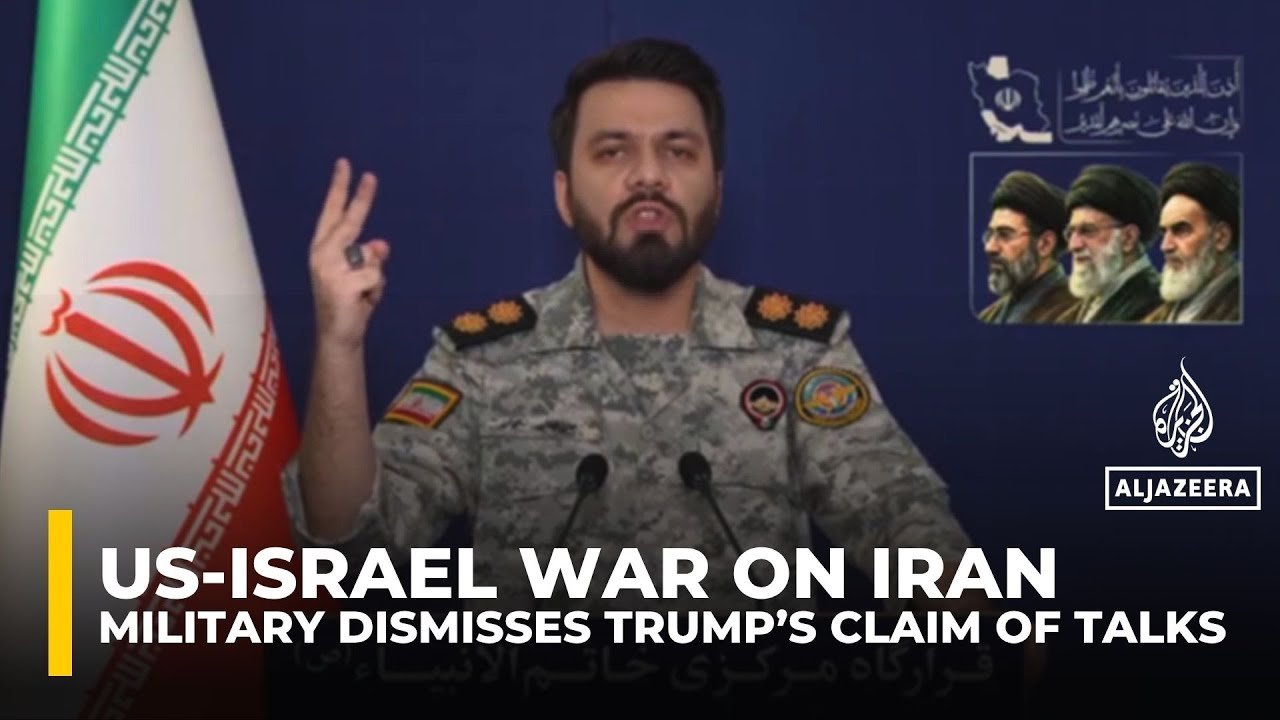
Iran’s response was swift and unequivocal. A military spokesperson dismissed the idea of any ongoing negotiations, ridiculing the U.S. position by stating that Washington was essentially “negotiating with itself.”
This statement was more than just a denial; it was a calculated message aimed at undermining U.S. credibility. Iranian officials emphasized that no direct talks had taken place and accused the United States of attempting to present a narrative of progress where none existed. The tone of the response reflected a broader strategy of defiance, signaling that Iran is unwilling to engage under current conditions.
A War of Narratives
The stark contrast between U.S. and Iranian statements reveals a growing “war of narratives.” While Washington portrays the situation as one of ongoing diplomatic engagement, Tehran insists that there is no dialogue and no agreement on the table. This divergence is not uncommon in international conflicts, where public messaging often serves strategic purposes. For the United States, projecting the image of negotiations may help calm global markets and demonstrate leadership. For Iran, denying such talks reinforces its stance of resistance and independence, particularly in the face of external pressure.
The phrase “negotiating with yourself” has become a powerful rhetorical tool, suggesting that the U.S. is attempting to manufacture the appearance of diplomacy to mask strategic challenges or setbacks.
Escalating Military Tensions
The diplomatic standoff comes against the backdrop of escalating military conflict in the Middle East. Reports indicate that both Iran and Israel have carried out airstrikes, with the situation intensifying into one of the most serious regional crises in recent years.
The conflict has had far-reaching consequences, including disruptions to global energy markets and increased military deployments by the United States. Washington is reportedly preparing to send additional troops to the region, further raising the stakes and increasing the risk of a prolonged confrontation. Iran, meanwhile, has emphasized its military capabilities and warned that regional stability depends on acknowledging its strategic role. This stance suggests that Tehran is not only rejecting negotiations but also positioning itself as a dominant force in the region.
The Role of Indirect Diplomacy
Despite the public denials, there are indications that indirect channels of communication may still exist. Countries such as Egypt, Pakistan, and Gulf states have reportedly been acting as intermediaries, facilitating the exchange of messages between Washington and Tehran.
This type of backchannel diplomacy is common in high-stakes conflicts, where direct engagement may be politically sensitive or strategically unfeasible. However, the existence of such channels does not necessarily translate into formal negotiations or agreements. Iran’s public rejection of talks may therefore coexist with limited, behind-the-scenes communication, creating a complex and often contradictory diplomatic landscape.
Strategic Messaging and Domestic Audiences
Both the United States and Iran are also addressing domestic audiences through their statements. For the Trump administration, emphasizing negotiations can signal control and progress, particularly in a volatile geopolitical environment.
For Iran, rejecting U.S. claims serves to maintain a strong domestic narrative of resistance. Admitting to negotiations, especially under pressure, could be perceived as a sign of which Iranian leadership is keen to avoid.
This dual-layered communication strategy complicates the situation further, as statements made for domestic consumption may not fully reflect the realities of international diplomacy.
Global Implications
The ongoing standoff between the United States and Iran has significant global implications. The uncertainty surrounding negotiations and the escalation of military activity have already impacted oil prices and global markets. The Strait of Hormuz, a critical chokepoint for global oil shipments, remains a focal point of concern. Any disruption in this region can have immediate and widespread economic consequences, affecting countries far beyond the Middle East.
Moreover, the lack of clear communication between the two sides increases the risk of miscalculation. In such a volatile environment, even minor incidents could escalate into a broader conflict.
Conclusion
The exchange of statements between the United States and Iran underscores the deep mistrust and complexity of their relationship. While Donald Trump’s claims of ongoing negotiations suggest a potential path toward de-escalation, Iran’s outright rejection highlights the challenges of achieving meaningful dialogue. The phrase “negotiating with yourself” captures the essence of the current impasse, reflecting not just a disagreement over facts but a broader clash of narratives and strategies. As military tensions continue to rise and diplomatic efforts remain uncertain, the situation serves as a reminder of how fragile peace can be in a deeply divided geopolitical landscape.
Whether through direct talks, indirect channels, or continued confrontation, the future of U.S.-Iran relations remains highly uncertain. What is clear, however, is that rhetoric alone will not resolve the الأزمة; only genuine engagement and mutual trust can pave the way for lasting stability.