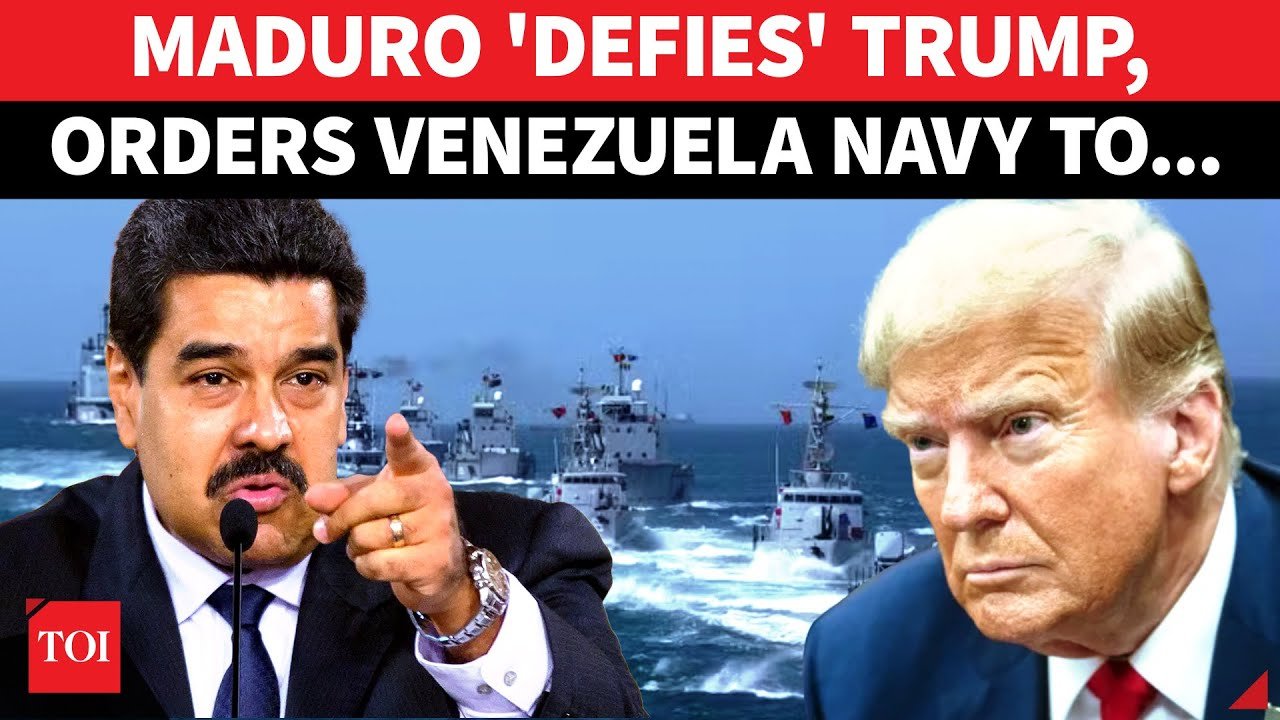
Rising tensions between the United States and Venezuela have once again pushed the two countries into global headlines. Reports suggesting that President Nicolás Maduro has ordered Venezuela’s navy to a heightened state of alert amid concerns over a possible US-led oil blockade have triggered intense international debate. While no formal declaration of conflict has been made, the developments signal a serious escalation in rhetoric and military preparedness, especially in the strategically sensitive Caribbean region.
This situation unfolds at a time when Venezuela’s oil sector remains central to its economy and to wider geopolitical calculations involving energy security, sanctions, and regional influence.
Background of US–Venezuela Tensions
Relations between Washington and Caracas have been strained for more than a decade. US sanctions on Venezuela, particularly those targeting its oil exports, were introduced to pressure the Maduro government over democratic governance, human rights concerns, and disputed elections.
For Venezuela, oil is not just an export commodity but the backbone of state revenue. Any restriction on its ability to produce, ship, or sell crude directly impacts public finances, social programs, and economic stability. From Caracas’ perspective, US measures are often framed as an “economic war” rather than conventional diplomacy.
These long-standing tensions provide the backdrop against which the latest naval developments must be understood.
Allegations of an Oil Blockade
The idea of an oil blockade has been circulating in political and media discussions rather than as a formally announced policy. A blockade, in traditional terms, would involve restricting maritime traffic to prevent oil shipments from reaching global markets.
US officials have not publicly declared an intention to impose a naval blockade. However, Venezuela’s leadership has repeatedly warned that any attempt to physically obstruct oil exports would be treated as an act of aggression.
Maduro’s recent statements suggest that Caracas is preparing for worst-case scenarios, even if such actions remain hypothetical at this stage.
Venezuela Navy Put on High Alert
According to statements from Venezuelan officials, the navy has been instructed to increase readiness levels and strengthen patrols around key maritime zones. These include oil shipping routes, ports, and offshore infrastructure critical to crude exports.
Putting naval forces on high alert does not necessarily mean imminent conflict. In many cases, it is a signaling tool used by governments to demonstrate resolve and deterrence. For Venezuela, this move appears designed to show that it will defend its sovereignty and economic lifelines if challenged.
The Venezuelan navy is relatively small compared to the US Navy, but it plays a symbolic and strategic role in asserting control over territorial waters.
Maduro’s Message to Washington
President Maduro has used strong language in recent speeches, framing the situation as a defense of national independence. He has emphasized that Venezuela will not accept foreign interference in its oil industry or territorial waters.
This messaging serves multiple purposes. Domestically, it reinforces a narrative of resistance and unity in the face of external pressure. Internationally, it aims to rally support from allies and signal that Venezuela is prepared to respond, at least politically and militarily, to perceived threats.
Such rhetoric, however, also raises concerns among observers about miscalculation or unintended escalation.
US Response and Strategic Position
The United States has largely maintained its position that sanctions are a tool of economic and diplomatic pressure, not military confrontation. US officials typically stress that their actions are aimed at promoting democratic reforms rather than provoking armed conflict.
At the same time, the US Navy maintains a strong presence in the Caribbean and surrounding regions as part of broader security operations, anti-narcotics missions, and protection of international shipping lanes. This existing presence often fuels speculation in Caracas about potential military intentions, even when Washington denies them.
So far, there has been no confirmation of any change in US naval posture specifically targeting Venezuela.
Regional and Global Implications
Any escalation involving Venezuela’s oil exports would have implications beyond the two countries. Venezuela holds some of the world’s largest proven oil reserves, and disruptions to its supply could affect global energy markets, especially during periods of price volatility.
Regional neighbors are also watching closely. Latin American countries generally prefer diplomatic solutions and are wary of military confrontations that could destabilize the region. International organizations and foreign governments may step in to encourage dialogue and de-escalation if tensions continue to rise.
For global investors and energy analysts, uncertainty itself can be a destabilizing factor.
Risk of Escalation or Strategic Signaling
Many analysts interpret the current developments as strategic signaling rather than a prelude to war. By placing the navy on high alert, Maduro’s government may be seeking leverage in negotiations or attempting to deter stronger enforcement of sanctions.
History shows that heightened alerts do not always translate into direct confrontation. However, the risk lies in misinterpretation. Increased military activity, even defensive in nature, raises the chances of accidents or misunderstandings, especially in contested or heavily monitored waters.
Clear communication channels are essential to prevent a crisis from spiraling out of control.
Impact on Venezuela’s Economy
Even without a physical blockade, the perception of heightened risk can hurt Venezuela’s already fragile economy. Shipping companies, insurers, and buyers may become more cautious, raising costs and reducing demand.
For ordinary Venezuelans, any further disruption to oil revenue could worsen inflation, shortages, and economic hardship. This makes the stakes particularly high for the Maduro government, which relies on oil income to maintain basic state functions.
International Calls for Calm
In similar past situations, international actors have urged restraint from all sides. Diplomatic engagement, back-channel talks, and mediation efforts are often used to defuse tensions before they escalate.
The current scenario may once again test the effectiveness of diplomacy versus pressure-based strategies. Whether cooler heads prevail will depend on actions taken in the coming weeks rather than dramatic headlines alone.
The news that Venezuela has placed its navy on high alert amid concerns over a US oil blockade highlights the fragile and volatile nature of US–Venezuela relations. While there is no confirmed military action underway, the combination of sanctions, strong rhetoric, and military signaling has raised global attention.
At this stage, the situation appears more about deterrence and political messaging than the start of an actual war. However, the risks of escalation cannot be ignored. How both sides manage communication, restraint, and diplomacy will determine whether this remains a tense standoff or evolves into a more serious confrontation.