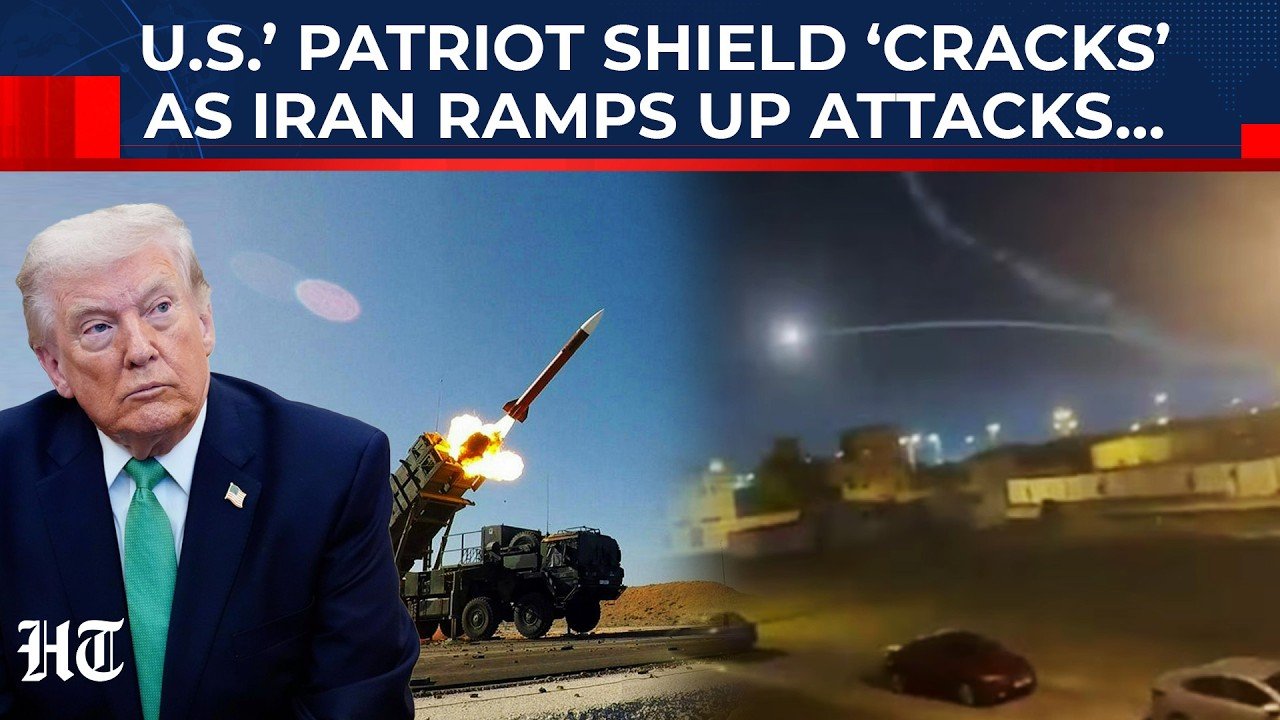
A Critical Moment in Middle East Tensions
The ongoing conflict between Iran and the United States has entered a phase where military capabilities are being tested in real-time, with global implications. One of the most alarming developments in this escalating crisis is the reported strike on a key air base in Bahrain, raising serious questions about the effectiveness of American-made air defense systems, particularly the Patriot missile shield.
Bahrain, a crucial U.S. ally in the Gulf and home to strategic military installations including the U.S. Navy’s Fifth Fleet, has found itself directly in the line of fire. Iran’s retaliatory strikes across the region have targeted countries hosting U.S. assets, transforming the Gulf into a high-risk battlefield.
The Strike That Raised Eyebrows
Reports of a missile or drone strike reaching sensitive areas in Bahrain have sparked intense debate among military experts and policymakers. While official statements from the United States and Bahrain often emphasize successful interceptions, evidence suggests that not all incoming threats are being neutralized.
Recent incidents indicate that despite advanced defense systems, some projectiles have either penetrated defenses or caused damage indirectly. In one case, a major explosion in Bahrain injured dozens of civilians, with analysis pointing to a Patriot interceptor missile being involved in the blast during an attempted interception.
This has fueled speculation that even when defense systems engage incoming threats, the outcome may not always be clean or effective. Debris, mid-air detonations, or system malfunctions can still result in significant damage on the ground.
Understanding the Patriot Defense System
The Patriot missile system, widely used by the United States and its allies, is designed to detect, track, and intercept incoming threats such as ballistic missiles, cruise missiles, and drones. It has long been considered one of the most advanced air defense systems in the world.
In Bahrain, Patriot PAC-3 systems have been deployed alongside U.S. fighter aircraft as part of a broader strategy to counter Iranian missile capabilities.
However, modern warfare presents new challenges. Iran’s missile and drone technology has evolved significantly, incorporating tactics such as swarm attacks, decoys, and unpredictable flight paths. These advancements can overwhelm even sophisticated defense systems, increasing the chances that some threats slip through.
Cracks in the Shield?
The central question emerging from recent events is whether the Patriot system is failing or simply being pushed to its limits. Defense experts caution against labeling the system as ineffective based on isolated incidents. No air defense system guarantees 100 percent interception.
In fact, military officials have acknowledged that in large-scale attacks, it is possible for a small number of missiles to evade interception. These “leakers,” as they are sometimes called, can still cause significant damage despite overall high interception rates.
Nevertheless, even a single successful strike can have outsized strategic and psychological impact. In the case of Bahrain, the perception that a U.S.-backed defense system failed to fully protect a key ally raises concerns across the Gulf region.
Iran’s Strategy and Intent
Iran’s approach appears to be focused on saturation and persistence. By launching repeated waves of missiles and drones across multiple targets, Tehran aims to stretch defensive systems thin and exploit any vulnerabilities.
Recent attacks have not been limited to Bahrain. Multiple Gulf countries, including Saudi Arabia, Qatar, and the United Arab Emirates, have faced similar threats, with varying degrees of success in interception. This coordinated pressure strategy serves multiple purposes. It demonstrates Iran’s reach, challenges U.S. influence in the region, and sends a clear message to countries hosting American forces: they are potential targets.
The Human and Strategic Cost
Beyond the military implications, these incidents carry significant human consequences. The explosion in Bahrain that injured over 30 civilians highlights the risks of conducting high-intensity defense operations in populated areas. Even successful interceptions can produce dangerous debris, while failed interceptions can lead to direct hits on infrastructure or residential zones. This raises ethical and strategic questions about how such systems are deployed, particularly in densely populated regions.
At the same time, the economic impact cannot be ignored. The Gulf region is critical to global energy supplies, and any disruption—whether from missile strikes or defensive failures—can ripple through international markets.
A War Beyond the Battlefield
The significance of these developments extends beyond physical damage. The perception of vulnerability among U.S. allies could alter regional dynamics. If countries begin to doubt the reliability of American defense systems, it may influence their strategic decisions, alliances, and military investments.
Iran, on the other hand, gains a psychological advantage by demonstrating that it can challenge even the most advanced military technologies. This perception can be as powerful as actual battlefield success.
What This Means for the United States
For the United States, the stakes are high. The credibility of its military technology and its role as a security guarantor in the Gulf are being tested. Any perceived weakness could embolden adversaries and unsettle allies. At the same time, U.S. officials are likely to emphasize the overall effectiveness of their systems, noting that the majority of incoming threats are intercepted. They may also point to the complexity of modern warfare, where perfect defense is virtually impossible.
The Road Ahead
As tensions continue to rise, the role of air defense systems will remain central to the conflict. Both sides are likely to invest further in advancing their capabilities—whether in offensive missile technology or defensive interception systems.
The situation in Bahrain serves as a stark reminder that modern warfare is unpredictable and often messy. Even the most advanced systems can be challenged, and even minor breaches can have major consequences.
Conclusion
The reported strike on a key Bahrain air base has intensified scrutiny of the Patriot defense system and, by extension, U.S. military reliability in the region. While it may be too early to declare the system “broken,” the incident highlights its limitations in the face of evolving threats. As Iran continues to test the defenses of U.S. allies, the balance between offense and defense remains uncertain. What is clear, however, is that the Gulf region has become a critical theater where technology, strategy, and perception intersect—with consequences that could shape the future of global security.